

What Happens During Smoke and Soot Cleanup
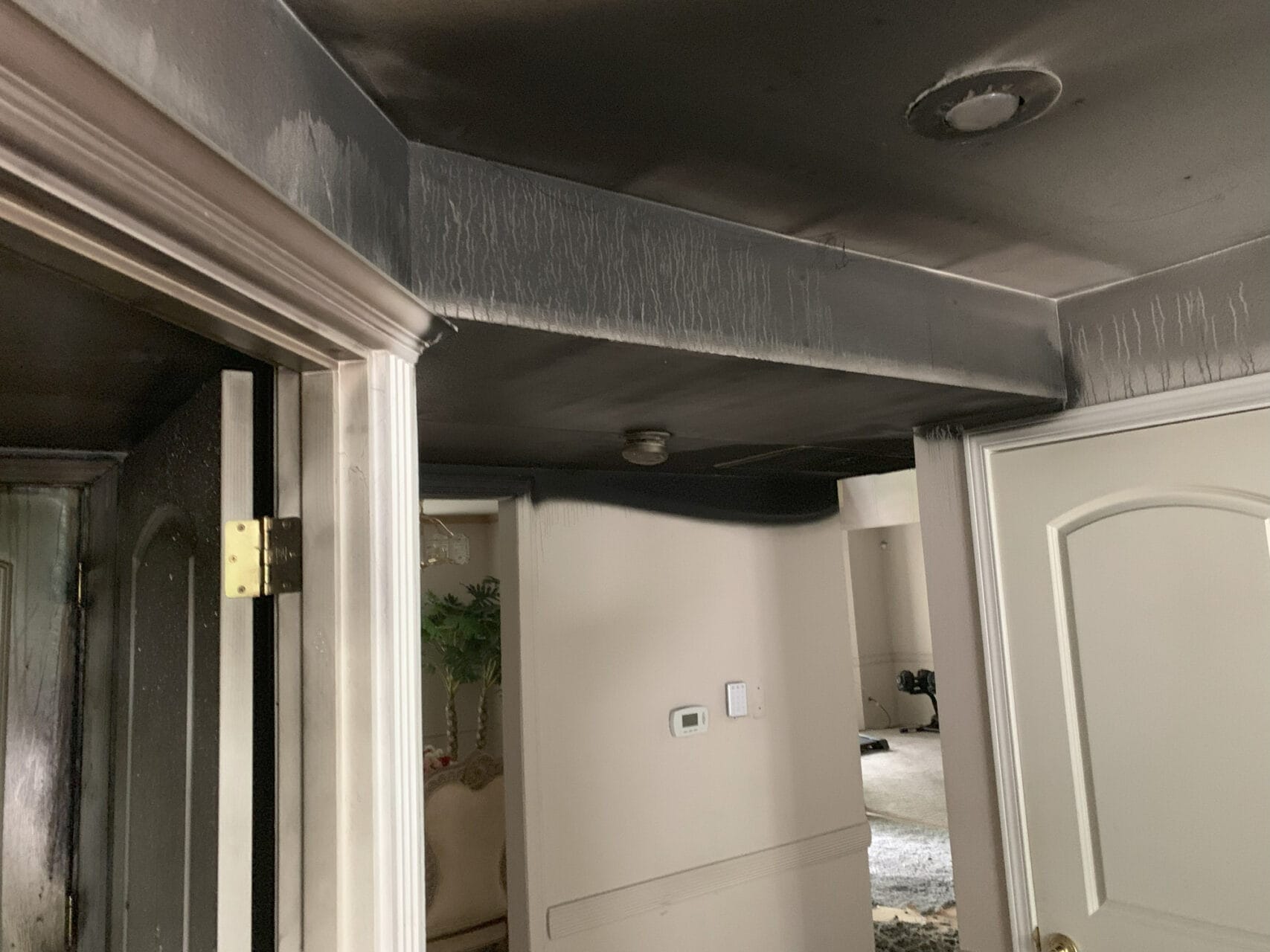
The fire is out, the trucks are gone, and what's left is a house that looks mostly intact and smells like something is still burning.
That's the part most people aren't prepared for. Smoke travels far past the room that burned, and soot settles on surfaces that never saw a flame. The cleanup that follows isn't wiping things down. It's a specific process, done in a specific order, and the order matters more than most homeowners realize.
Here's what the smoke damage cleanup process actually looks like.
First, What Not to Do
This is the most useful thing we can tell you, because the damage people do to their own homes in the first 48 hours is often worse than what the smoke did.
- Don't clean. Do not wipe walls, ceilings, flooring, or contents before talking to a professional. Soot streaks when it's cleaned wrong, and those streaks can become permanent.
- Don't wash. Smoke-damaged clothing washed in a normal cycle usually comes out worse. It needs to be pre-treated first.
- Don't touch. Handling soot-covered items presses the particles into the surface. Leave them until they've been pre-cleaned.
- Don't run the HVAC. Change the filter in your return and put cheesecloth or a filter material over the registers so you're not circulating soot into clean rooms.
- Don't use damaged electronics or appliances. Talk to an electrician first about anything exposed to fire or water.
If the power is out, inventory and empty the refrigerator and freezer while you're waiting.
Why Soot Is More Than a Mess
Soot is acidic, and left alone, it doesn't just sit there looking bad. It etches and corrodes, and it does it fastest on the things you'd least like to replace.
Light fixtures, appliances, and plumbing fixtures can take permanent damage if they aren't professionally cleaned quickly after a fire. Metal starts to pit. Plastics yellow and hold odor. Porous materials absorb residue that gets harder to pull out with every day that passes.
That's why timing drives everything in fire and soot work. The cleanup isn't urgent because the house looks bad. It's urgent because the damage is still happening.
Step 1: Assessment and Containment
Our team walks the property to map how far the smoke traveled and what type of residue it left behind. That second part matters. A grease fire leaves a different residue than burning synthetics or a chimney fire, and each one takes a different cleaning approach.
Before any cleaning starts, we contain the affected areas. Soot spreads easily, and the goal is to keep it from migrating into parts of the home that are still clean.
Step 2: Debris Removal and Water Cleanup
Anything too damaged to save comes out first. This usually includes charred materials, heavily saturated insulation, and contents that can't be restored.
Most fires also leave water behind from suppression efforts. That has to be extracted and dried on the same timeline as the soot work, because a wet, smoke-damaged structure grows mold on top of everything else.
Step 3: Soot Removal
This is the heart of the smoke damage cleanup process, and it's almost always done dry before it's done wet.
Loose soot gets removed with dry methods first, because introducing moisture too early smears residue deeper into the surface. Once the loose material is off, surfaces are cleaned with products matched to the type of residue present. Walls, ceilings, trim, cabinetry, and hard surfaces each get handled differently based on what they're made of and how much residue they absorbed.
Some surfaces clean up completely. Others get sealed and repainted. Some have to be replaced. Part of our job is telling you honestly which category each one falls into instead of cleaning something three times that was never going to come back.
Step 4: Contents Cleaning
Your belongings can take on as much damage as the structure itself. Clothing, furniture, electronics, drapery, and everything inside your cabinets all absorb smoke and soot, and all of it needs professional cleaning to come back.
For larger losses, contents often come out of the house entirely. We have over 13,000 square feet of climate-controlled warehouse space for storing and cleaning belongings while the structure is being restored. That gets your things out of a contaminated environment and gives our crews room to work.
Step 5: Deodorization
Smoke odor is not a surface problem. Odor molecules sink into drywall, framing, carpet padding, and upholstery, which is why a house can look clean and still smell like a fire months later.
Deodorization treats the structure and the contents separately, using cleaning products and equipment designed to neutralize odor at the source rather than cover it. Anything that only masks the smell will fail as soon as the weather turns humid.
Step 6: HVAC Cleaning
Your ductwork pulled smoke through the entire house while the fire was burning, and it will keep redistributing whatever is left in there every time the system runs.
Skipping this step is the most common reason a fully restored home still smells. HVAC cleaning is part of doing the job right, not an upsell.
Step 7: Repairs and Rebuilding
Once cleanup is complete and the structure is dry and deodorized, the rebuild begins. Depending on the fire, that ranges from repainting and replacing trim to full reconstruction of framing, cabinetry, and flooring.
Handling both phases in-house means you're not hiring a separate contractor and starting the conversation over once the cleanup crew leaves.
FAQs
How long does smoke and soot cleanup take?
It depends on how far the smoke traveled, what burned, and how much of the structure and contents need cleaning. A single room with light residue is a much shorter job than a whole-house loss with heavy soot. We'll give you a realistic timeline after we've assessed the property.
Can I clean soot off the walls myself?
We'd strongly recommend against it. Soot streaks and embeds when it's handled incorrectly, and a surface that could have been cleaned often ends up needing replacement instead.
Will the smoke smell come back?
Not if the odor is treated at the source, including the ductwork and any porous materials holding residue. Odor that returns is usually a sign something was masked rather than removed.
Does insurance cover smoke and soot cleanup?
In most cases, yes. We work directly with all major insurance providers and handle the documentation so you're not stuck relaying messages between your adjuster and us.
Take Action
Soot damage gets harder and more expensive to reverse every day it sits. If your home or business has fire or smoke damage anywhere in Middle Tennessee, call us at (615) 469-2400 or reach out here.
Our Disaster Recovery Team is on call 24 hours a day, 365 days a year. Learn more about our fire and smoke damage services.