

The Real Restoration Timeline: From Emergency Call to Final Repairs
The first question almost every homeowner asks us is some version of "how long is this going to take?"
It's a fair question, and it deserves a real answer instead of a vague one. The honest version is that a water damage restoration timeline has two very different halves. The emergency work moves quickly once we're on-site. The repair work that follows moves at the speed of insurance approvals, material availability, and how much of your home needs to be rebuilt.
Here's what each stage actually looks like.
The Emergency Call
The clock starts the moment the water starts moving. Every hour it sits, it travels farther into subfloors, wall cavities, and insulation, and mold can begin growing in as little as 24 to 48 hours in the right conditions.
We're on call 24 hours a day. For an active emergency, we will be onsite as soon as possible to start the mitigation and drying process. Before we get there, the most useful things you can do are shut off the water source if you can do it safely, call a plumber to stop the leak, and move valuables out of the affected area.
Not every call is an emergency, and that's worth saying plainly. We also get a lot of calls from people who want us to come take a look and put together a free estimate. Sometimes we can do that the same day. Other times we're booked out several days. If water is actively spreading in your home, say so when you call so we can prioritize it correctly.
Day 1: Assessment and Water Extraction
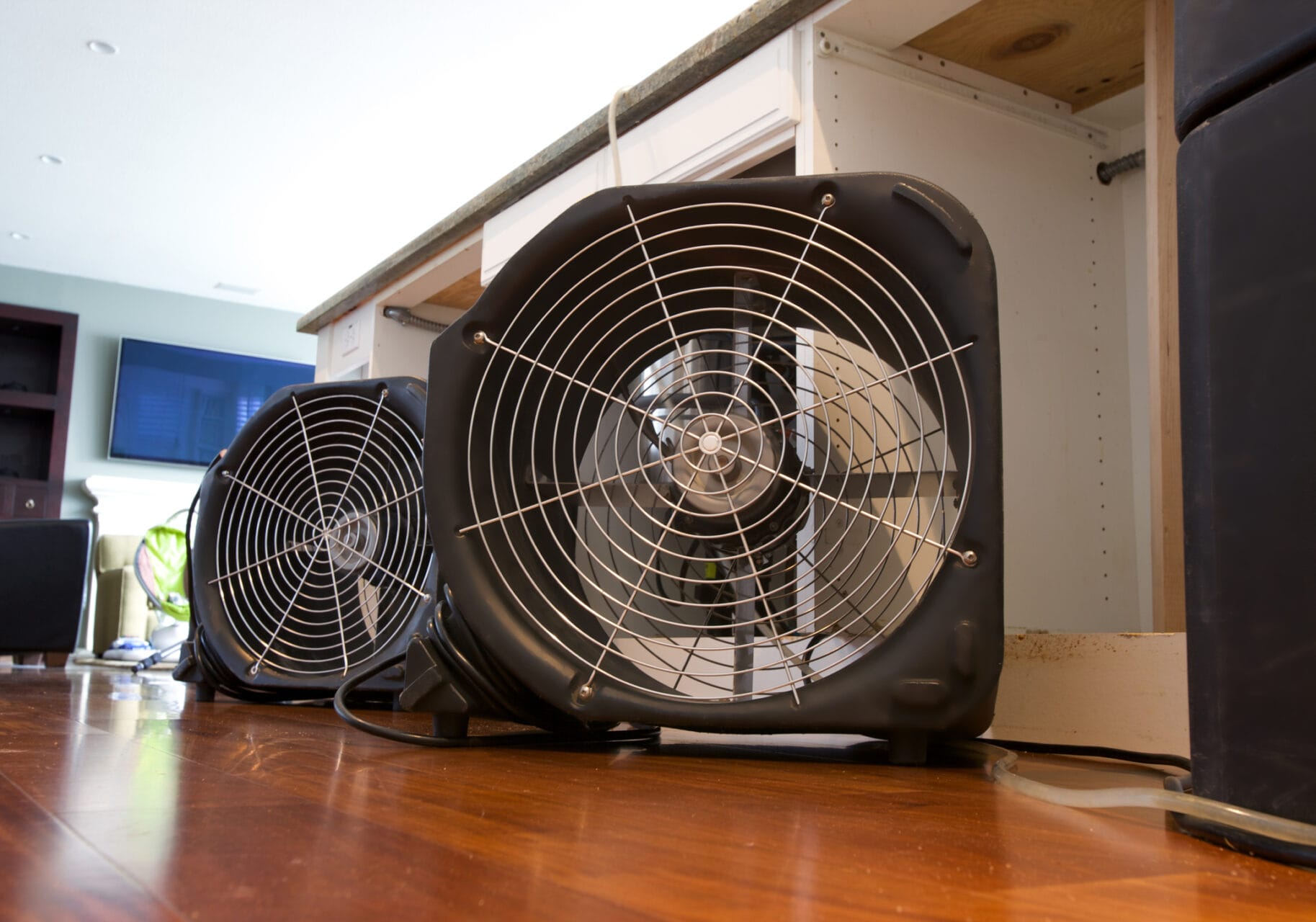
Once our team is on-site, the first few hours are inspection and extraction. We map how far the water has spread using moisture meters, because the wet area is almost always bigger than what you can see. Then we pull out standing water, remove materials that can't be saved, and set drying equipment.
Most single-room losses get through this stage in a day. Larger losses, multiple floors, or a slab that's been sitting wet can take multiple days.
Days 2 to 5: Structural Drying
This is the part that tests everyone's patience, because it looks like nothing is happening. Fans and dehumidifiers run, we come back to take moisture readings, and the house stays loud.
Three to five days is typical. Drywall and carpet give up moisture quickly. Hardwood, plaster, and concrete hold onto it much longer and can push drying past a week. We don't pull equipment based on the calendar. We pull it when the readings say the structure is genuinely dry, because closing walls up over trapped moisture is how you end up with mold six months later.
For most homeowners, this is the end of the emergency phase. The house is dry and safe. It's also missing baseboards, sections of drywall, and flooring.
The Gap Between Drying and Rebuilding
Here's the stretch nobody warns you about, and it's the single biggest reason restoration timelines vary so much.
Between mitigation and reconstruction sits your insurance claim. The adjuster has to review documentation, approve the scope of repairs, and release funds. That can happen in a few days or take a few weeks depending on the carrier, the size of the loss, and how well the damage was documented on day one.
This is where thorough documentation pays for itself. We photograph everything, log moisture readings daily, and write scopes in the format adjusters expect. We also work directly with all major insurance providers so you're not stuck relaying messages between us and your adjuster. It doesn't eliminate the wait, but it removes the back-and-forth that usually causes it.
Reconstruction and Final Repairs
Once the scope is approved, we can then coordinate our people and order materials. This stage has the widest range of any part of the timeline.
A single bathroom or a small section of flooring can be back to normal in a week or two. A kitchen with cabinetry, a whole floor of a home, or a job that involves structural framing runs several weeks to a few months. Custom materials stretch things further. Matching existing hardwood, ordering specialty tile, or waiting on cabinets can add weeks that have nothing to do with labor.
Our reconstruction team handles this phase directly, which keeps you from having to hire a separate contractor and restart the whole conversation.
What Makes a Restoration Timeline Longer
Same amount of water, very different timelines. These are the factors that usually explain the difference:
- How long the water sat. A leak caught in an hour is a different job than one discovered after a weekend away.
- What kind of water it was. Clean supply line water is straightforward. Sewage or floodwater requires containment, disposal, and sanitization.
- What got wet. Carpet and drywall dry fast. Hardwood, plaster, and concrete don't.
- Whether mold is present. Mold remediation adds containment and clearance steps.
- Insurance approval speed. Often the longest single delay in the whole process.
- Material lead times. Especially for anything that needs to match what was already there.
A Realistic Range
For a typical residential water loss in Middle Tennessee, plan on:
- Emergency response: as soon as we can get there
- Extraction and setup: 1 to 2 days, sometimes more
- Structural drying: 3 to 5 days, sometimes longer
- Insurance approval: a few days to a few weeks
- Reconstruction: depends entirely on scope and material availability
FAQs
How long does water damage restoration take?
It depends on the damage. Smaller jobs move faster, while larger losses involving multiple rooms, structural damage, or custom materials take considerably longer. Scheduling and material availability play a role too, so even a small job can stretch out during a busy stretch. We'll give you a realistic estimate once we've seen the property.
Why does drying take so many days?
Water soaks into subfloors, framing, and wall cavities, not just the surfaces you can see. We monitor moisture levels daily and only remove equipment when readings confirm the structure is dry.
Can I stay in my home during restoration?
Often yes, especially for smaller losses. It depends on which rooms are affected, whether water or electrical service is disrupted, and whether contaminated water is involved. We'll tell you honestly after the initial assessment.
Does insurance affect how long it takes?
Yes, more than most people expect. Claim review and scope approval sit between the drying and rebuilding phases, and that window varies by carrier and by how well the loss was documented.
Water Damage Doesn't Wait, and Neither Do We
The fastest way to shorten your restoration timeline is to shorten the time between the damage and the first call. Every hour counts, and we're available 24 hours a day, 7 days a week.
If you're dealing with water damage or storm damage anywhere in Middle Tennessee, call us at (615) 469-2400 or reach out here. We'll walk your property, give you a straight answer on what it will take, and get to work.